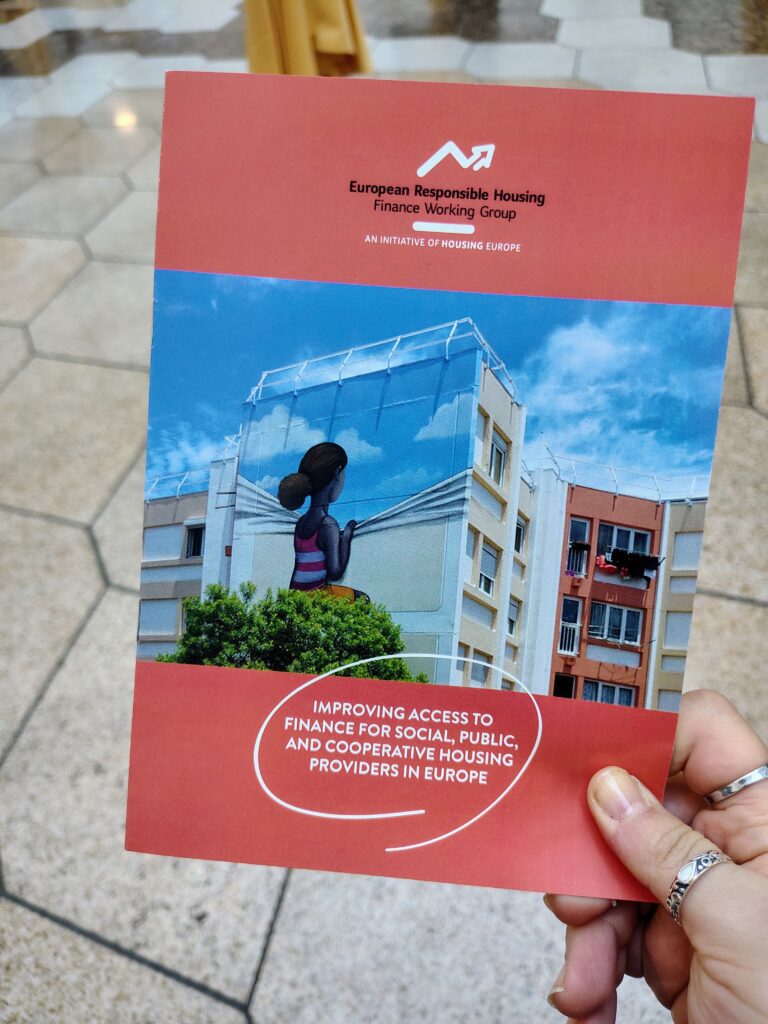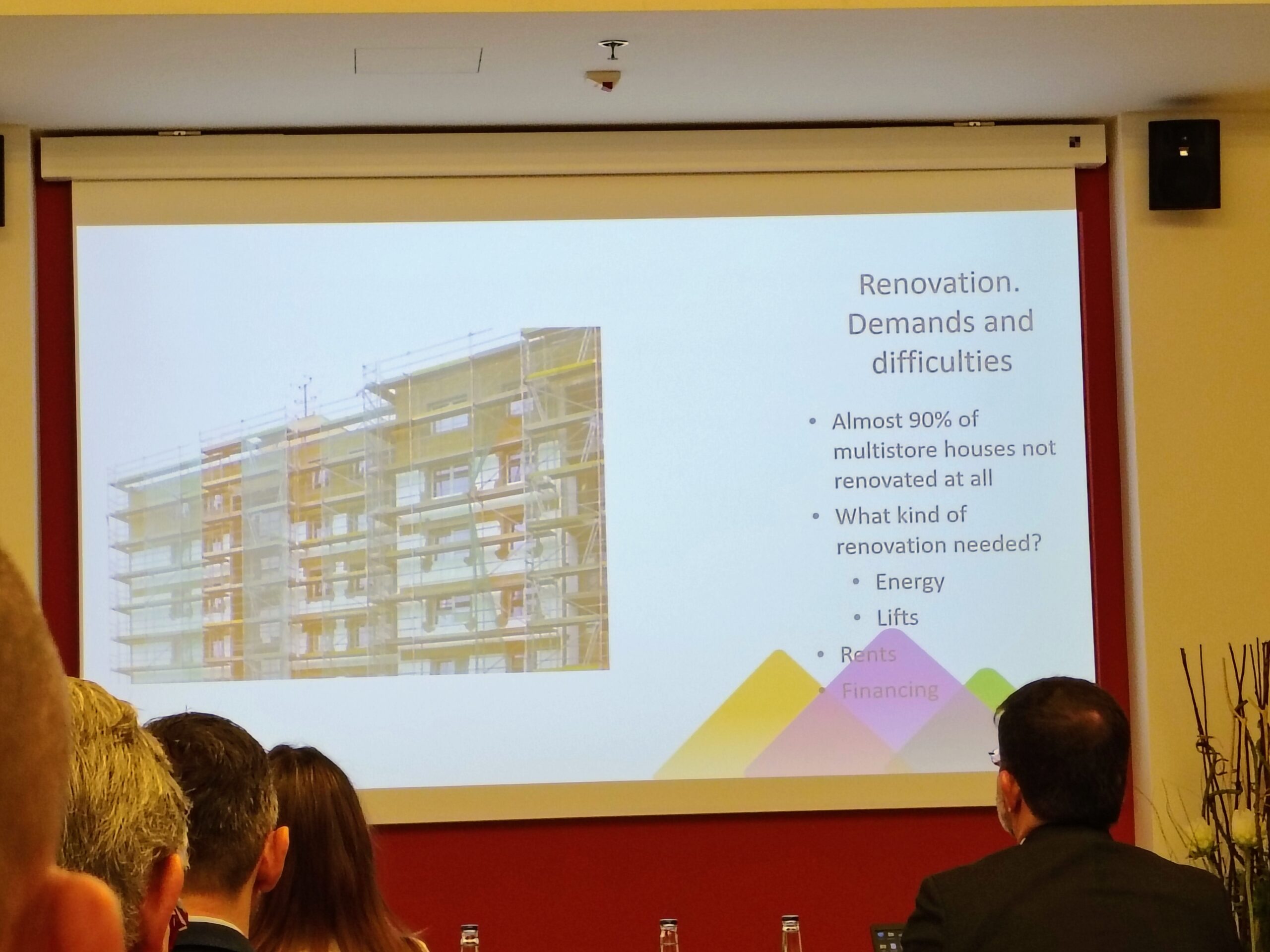
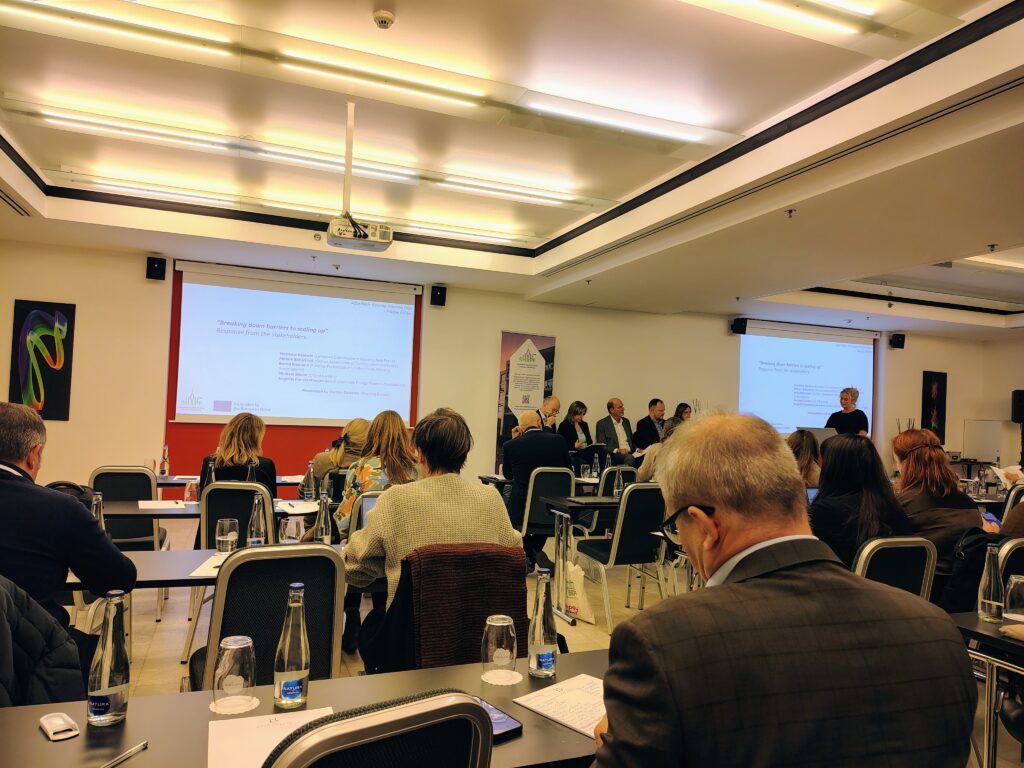
In November 2025, the Major Development Agency of Thessaloniki (MDAT) and the Housing Thessaloniki initiative took part in the Affordable Housing Initiative (AHI) Days and the 3rd European Responsible Housing Finance Summit in Prague. Over two intense days of workshops and pitching sessions, cities, housing providers and public banks sat around the same table to discuss one question: how do we actually finance the next generation of affordable, climate-resilient neighbourhoods?
For Thessaloniki, this was an opportunity to present a vacant-to-affordable housing pilot in the historic centre, developed in the framework of the URBACT “Cities 4 Cohousing” (C4CH) network. The project explores how a listed building can be reused for a mix of social and cost-rental housing with common spaces, instead of becoming yet another hotel or short-term rental. More broadly, it allowed us to test some of the ideas developed in our Local Investment Plan in front of development banks and peers from across Europe.
A first, very clear message from Prague was that housing is radically multidisciplinary. Financial engineering, energy retrofitting, planning rules, social support, digital tools, legal frameworks: none of these can deliver on their own. Yet our institutions are still organised in sectoral silos. This became visible in discussions on retrofitting the existing stock, where technical solutions, affordability and social goals must be designed together, not one after the other.
Another recurring theme was the need for revolving funds and one-stop-shops that give cities and public or cooperative providers stable, long-term frameworks instead of a patchwork of short calls. For a place like Thessaloniki – with a fragmented property landscape, many small owners and complex building histories – this is crucial. MDAT already plays part of this role for the metropolis; the Prague discussions confirmed how important such intermediaries are if we want to move from ideas to implementation.
The Mediterranean session brought an especially powerful contribution from Barcelona. Colleagues there insisted that we must start from the right to housing and from a renewed social contract between the city and its residents. They framed the current situation as a market failure that cannot be solved by “activating” the market alone; the market itself has to be governed and controlled, with clear rules on rents, land and vacancies. They also reminded us that transforming housing systems is a ten-year project at minimum. While we work on new supply, renovation and new financial instruments, we need strong tenant protections in the meantime so that vulnerable households are not sacrificed to the transition.
From an EU perspective, they pointed to inadequate renovation standards and insufficient financing tools that do not yet match the scale of the crisis or protect affordability strongly enough. These points resonate strongly with Thessaloniki’s experience, where energy poverty, rising rents and underused buildings coexist in the same neighbourhoods.
Above all, we are reminded that treating housing as a right is not just a slogan, but a long-term commitment that must shape how we plan, how we retrofit, and how we finance our city.